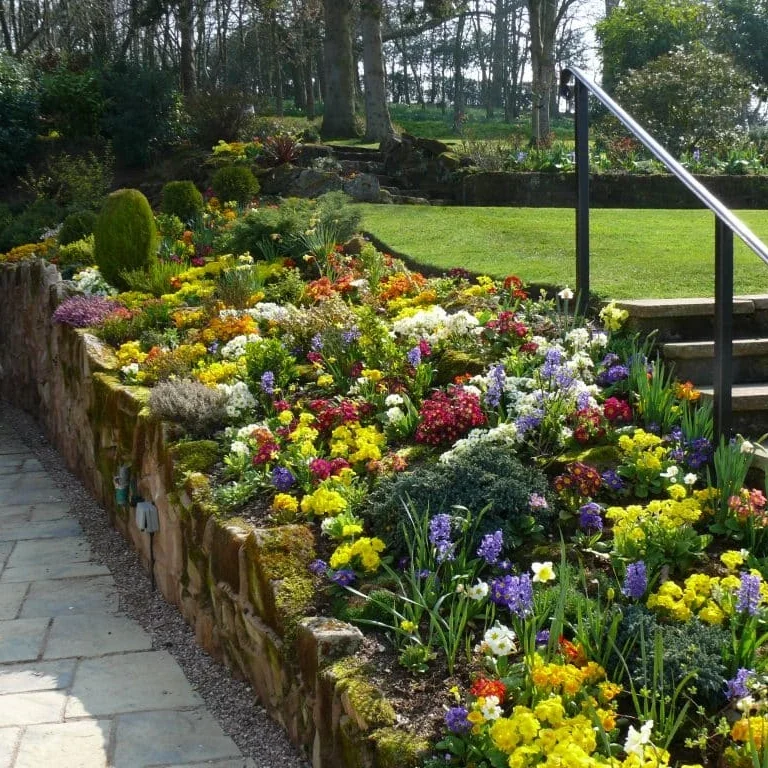
Private Garden Maintenance
in Stone
Maintaining beautiful gardens since 1995.
For clients who expect reliability, expertise and professionalism.
Our trusted team maintains private gardens across Stone and surrounding areas.

Maintaining beautiful gardens since 1995.
For clients who expect reliability, expertise and professionalism.
Our trusted team maintains private gardens across Stone and surrounding areas.
Our private garden maintenance service in Stone is designed for homeowners who value a well-cared-for garden but may not have the time or capacity to manage every task themselves.
A one-off visit can provide focused help with pruning, hedge cutting, clearances and seasonal work. Regular weekly or fortnightly maintenance offers more consistent support, with each visit planned around the garden’s condition and the changing needs of the season.
Whether you have a busy family home, a mature garden or a larger outdoor space, our team can manage the demanding work while keeping the service personal and responsive to your priorities.

We operate across Stone, from Walton through to Stonefield.
At one property in Stone, near Barlaston, the lawn appeared healthy from a distance, but didn’t feel right underfoot.
Certain areas were holding moisture due to the heavier clay ground, while slightly higher sections were drying out more quickly. The result was a lawn that looked uneven week to week — softer in places, slightly patchy in others, and never quite consistent.
The work focused on stabilising the surface rather than just cutting it — adjusting mowing frequency to avoid stressing softer areas, reinstating clean edges to stop the lawn spreading into the borders, and introducing a light, targeted treatment to encourage more even growth.
Over time, the difference became less visual and more physical — the lawn felt firmer, more consistent to walk across, and held its finish between visits.
At a property in Stone, towards Yarnfield, the issue wasn’t how the garden looked — it was how it behaved.
After periods of rain, parts of the lawn and surrounding edges were holding water, making the space soft and difficult to use. Foot traffic was starting to wear certain routes into the lawn, while other areas remained thick and slightly overgrown.
This is common in gardens across Stone and nearby areas, where clay-heavy ground slows drainage and creates uneven pressure across the space.
The approach focused on restoring usability — keeping the lawn shorter and more consistent to reduce stress on wet ground, defining walking lines through mowing patterns, and maintaining sharper edges to stop the space spreading and softening further.
A seasonal visit was also introduced to support the lawn through wetter periods and prevent compaction building over time.
The result wasn’t just a neater garden — it was one that could be used again without avoiding certain areas.
At one property in Stone, near Tittensor, the lawn had started to lose consistency across the growing season.
Even with regular cutting, certain areas would thin out while others pushed ahead. Borders were also starting to creep forward slightly, making the lawn feel smaller and less defined.
This kind of pattern is typical in parts of Stone, where soil conditions vary across short distances, affecting how grass establishes and recovers.
Instead of increasing cutting frequency, the focus shifted to correcting the underlying issue — introducing a simple treatment plan to support lawn density, tightening border edges to reclaim lost space, and keeping mowing intervals consistent to avoid stressing weaker areas.
Over the following weeks, the lawn began to even out — not just in colour, but in density and shape — and the space felt more defined again.

“If you notice the garden, it’s usually because something’s off. We keep it so you don’t notice it at all.”
Consistent upkeep across the whole garden ensures lawns, borders, and surfaces stay in line without visible drop in standard.
Most gardens across Staffordshire are maintained weekly or fortnightly, depending on how quickly they grow and how the space is used.
What tends to vary is how different areas behave. In parts of Stafford, Stone, and surrounding villages, heavier soil can slow or uneven growth, while more open areas around Cannock or Uttoxeter can move more quickly.
Regular maintenance keeps everything in step, so those differences don’t turn into imbalance.
It’s usually down to changing conditions across the space.
Soil type, exposure, and layout all vary across the county. You’ll often see this in gardens around Stone and Stafford, where moisture sits differently, compared to more exposed locations like Cannock Chase or parts of Uttoxeter.
Without consistent upkeep, one area begins to move ahead while another falls behind. Regular maintenance keeps everything aligned.
Soil plays a bigger role than most people expect.
Across much of Staffordshire, including Stone, Stafford, and surrounding areas, heavier clay soils can lead to slower drainage and uneven growth. In contrast, more open or elevated areas can dry out more quickly.
That variation affects lawns and planting differently across the same garden. Ongoing maintenance helps manage those differences, so the space stays balanced.
It comes down to managing the whole space, not just individual areas.
Gardens across Staffordshire — from more structured spaces in towns like Stafford to more open plots around Uttoxeter or Cannock — rarely behave the same throughout.
Regular, structured maintenance keeps everything moving together, so no single area starts to stand out or fall behind.
In most cases, yes.
What tends to turn into overgrowth or imbalance usually starts as small changes — uneven lawns, soft edges, or planting moving out of place. Across Staffordshire gardens, those changes build gradually.
Maintained regularly, they’re dealt with early, so the garden stays under control rather than needing to be brought back.
It usually shows up in subtle ways.
You might notice the lawn isn’t as even, edges begin to soften, or planting looks slightly ahead of where it should be. Across areas like Stafford, Stone, and Cannock, those changes often build quietly.
Regular maintenance keeps those early signs in check, so they don’t develop into something more noticeable.
It’s about adjusting as conditions shift, rather than reacting afterwards.
Across the county, seasonal changes affect gardens differently — particularly between more sheltered areas like Stafford or Stone and more exposed locations such as Cannock or rural parts of Uttoxeter.
Ongoing maintenance keeps pace with those changes, so the garden stays steady rather than needing to be reset each season.
Variation is common, especially in larger spaces.
Different parts of the garden will respond differently depending on soil, light, and use. In gardens across Staffordshire, particularly around rural areas or larger plots, that can create imbalance if it’s left.
Regular maintenance keeps everything aligned, so the space feels consistent.
Cost depends on the size of the garden, how varied the conditions are, how detailed the space is, and how often it needs to be maintained.
Across Staffordshire — from towns like Stafford and Stone to more rural areas — gardens can differ significantly in layout and behaviour, which affects how much time is needed to keep everything in line.
After a visit, you’ll have a clear understanding of what’s required to maintain it properly.
Most ongoing upkeep is covered within regular maintenance.
From time to time, additional work may be needed — such as heavier pruning, restoring overgrown areas, or more involved seasonal clearance. In some Staffordshire gardens, this can also include managing areas affected by soil conditions or uneven growth.
These are handled separately so the regular service remains consistent, and nothing is rushed.
Responsible for a commercial site? Blue Iris Landscapes also provides commercial grounds maintenance, tree services, winter gritting and sports turf maintenance, with planned support for outdoor spaces throughout the year.